
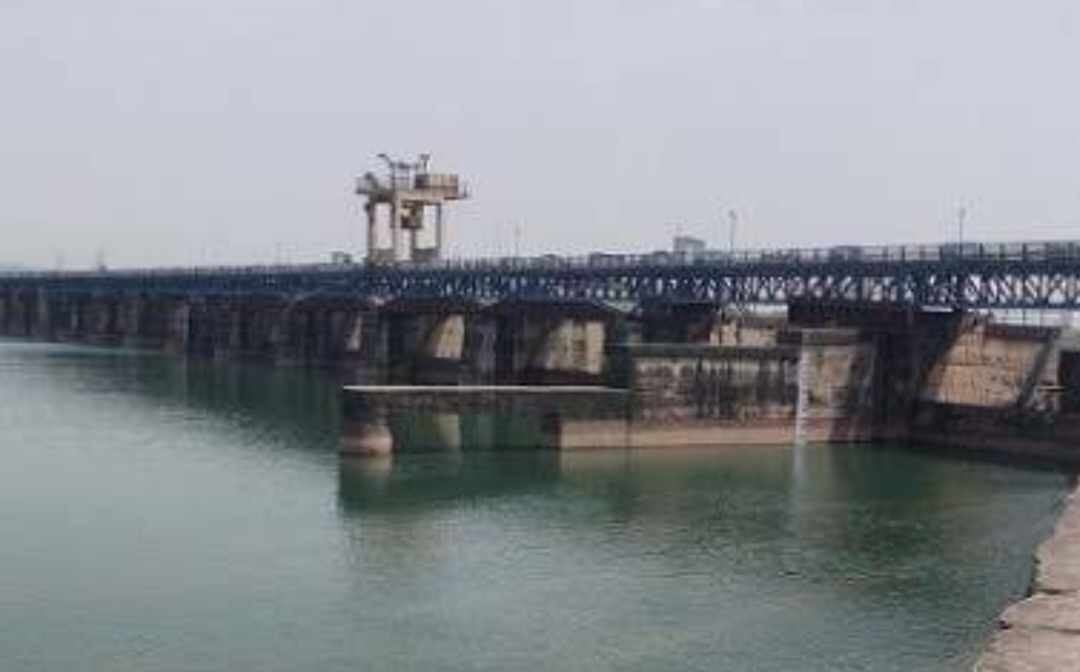
The Shahpur Kandi Barrage (also known as Shahpurkandi Dam Project) on the Ravi River in Pathankot district, Punjab, is nearing full operationalization.
A key recent milestone is that water from Shahpur Kandi has reached the Ujh Barrage in Kathua district, Jammu & Kashmir, for the first time through a newly established gravity-based link to the Main Ravi Canal.
This development marks a significant step in integrated water management for the Ravi basin.
Background of Shahpur Kandi Barrage
Conceptualized decades ago, the project aims to harness India’s share of the Ravi River waters under the 1960 Indus Waters Treaty (IWT), which allocates the eastern rivers (Ravi, Beas, and Sutlej) to India. Located downstream of the Ranjit Sagar Dam and upstream of the Madhopur Barrage, the 55.5-metre-high structure was long delayed due to inter-state disputes, funding issues, and political hurdles. It received national project status and fresh impetus after 2018.
Key Features-
Two hydropower plants with a combined capacity of 206 MW.
– Irrigation benefits: Approximately 5,000 hectares in Punjab and over 32,000 hectares in the drought-prone Kandi belts of Kathua and Samba districts in J&K.
– Primary goal: Regulate and store surplus Ravi waters that previously flowed unutilized into Pakistan, especially during high-flow periods.
The Critical Link with Ujh Barrage / Ujh Multipurpose Project
The Ujh River is a major tributary of the Ravi that joins the main river downstream of Shahpur Kandi and Madhopur. While Shahpur Kandi regulates the main stem of the Ravi, the Ujh Multipurpose Project focuses on the tributary to capture additional flows that would otherwise bypass upstream structures
.Recent Operational Milestone (May 2026):
Ravi water from Shahpur Kandi has now reached the Ujh Barrage via the new linkage. Initial releases of around 200 cusecs are underway, with plans to increase flows. This has enabled better water availability for year-round irrigation in Kathua and adjoining areas, reducing monsoon dependence and benefiting farmers in the Kandi region.
Synergistic Benefits:-
Shahpur Kandi acts as an upstream regulator on the main Ravi.- Ujh Project (on the tributary) adds storage, hydropower (around 196–200 MW proposed), and irrigation capacity.- Together with the proposed second Ravi-Beas link, they form a comprehensive strategy to maximize utilization of India’s allocated waters. Experts note that Shahpur Kandi alone captures only a fraction of the potential; full optimization requires the Ujh project and additional links. Union Minister Dr. Jitendra Singh has highlighted both projects as transformative for border districts of Kathua, Samba (J&K), and Pathankot, Gurdaspur (Punjab).
The Ujh Multipurpose Project received final approvals and Technical Advisory Committee (TAC) nod in early 2026, accelerating alongside Shahpur Kandi.
Broader Strategic and Diplomatic Significance
These initiatives come amid heightened India-Pakistan tensions and the suspension of the Indus Waters Treaty. By plugging “wastage” of eastern river waters, India is exercising its rights under the IWT while addressing domestic water scarcity in border regions. Pakistani concerns about reduced downstream flows have been noted, but India maintains these projects utilize waters allocated exclusively to it.
Expected Outcomes:-
Enhanced irrigation and agricultural productivity in drought-prone areas.- Increased hydropower generation and better regulation of flows for existing projects like Ranjit Sagar Dam (600 MW).- Strengthened water security and economic resilience in Punjab and Jammu & Kashmir.- Diplomatic leverage through optimal use of treaty-allocated resources.
A Long-Awaited Milestone for Water Security
The Shahpur Kandi Barrage, now linked operationally with the Ujh system, represents persistence in India’s infrastructure push despite decades of delays. As reservoir filling, testing, and expanded flows progress in 2026, these interconnected projects are set to deliver tangible benefits to farmers, generate clean energy, and reinforce India’s control over its rightful share of the Ravi waters.This integrated development in the Indus basin highlights the critical interplay of hydrology, interstate cooperation, agriculture, and strategic interests—one of the most vital water management efforts in northern India.


