
Samba Times Special
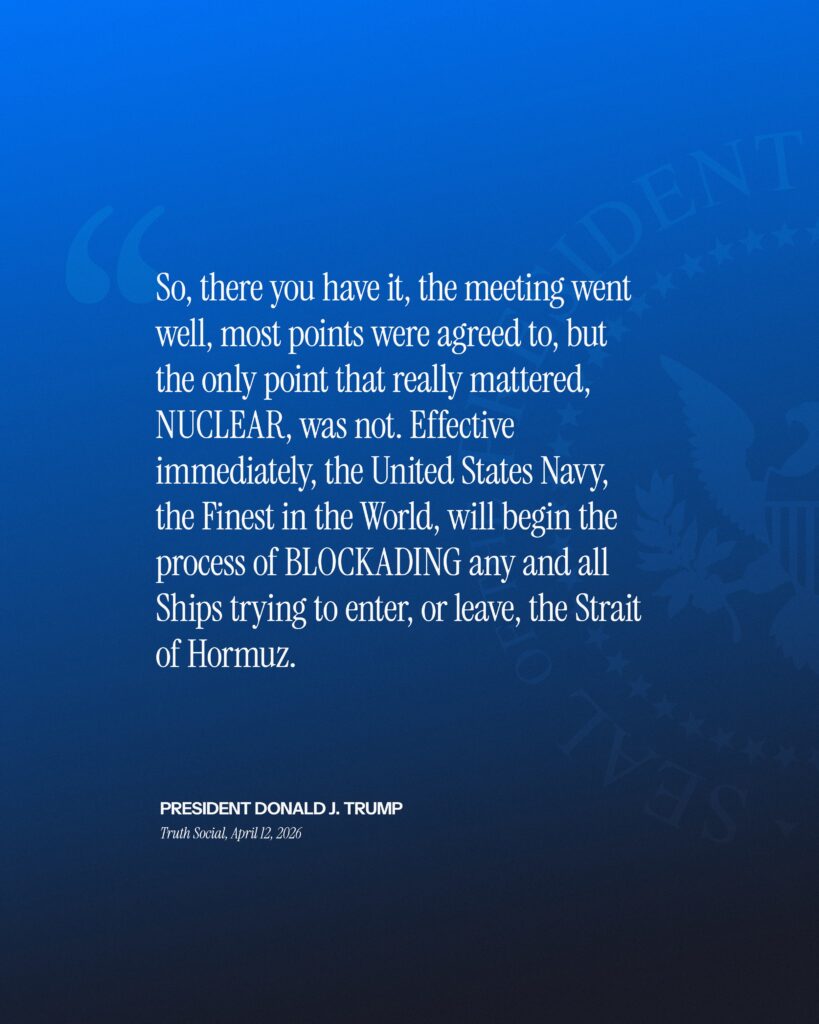
In a dramatic escalation following the collapse of high-stakes US-Iran peace negotiations in Islamabad, US President Donald J. Trump has ordered the US Navy to impose an immediate blockade on the Strait of Hormuz. “Effective immediately, the United States Navy, the Finest in the World, will begin the process of BLOCKADING any and all Ships trying to enter, or leave, the Strait of Hormuz,” Trump declared on Truth Social on Sunday, April 12, 2026.
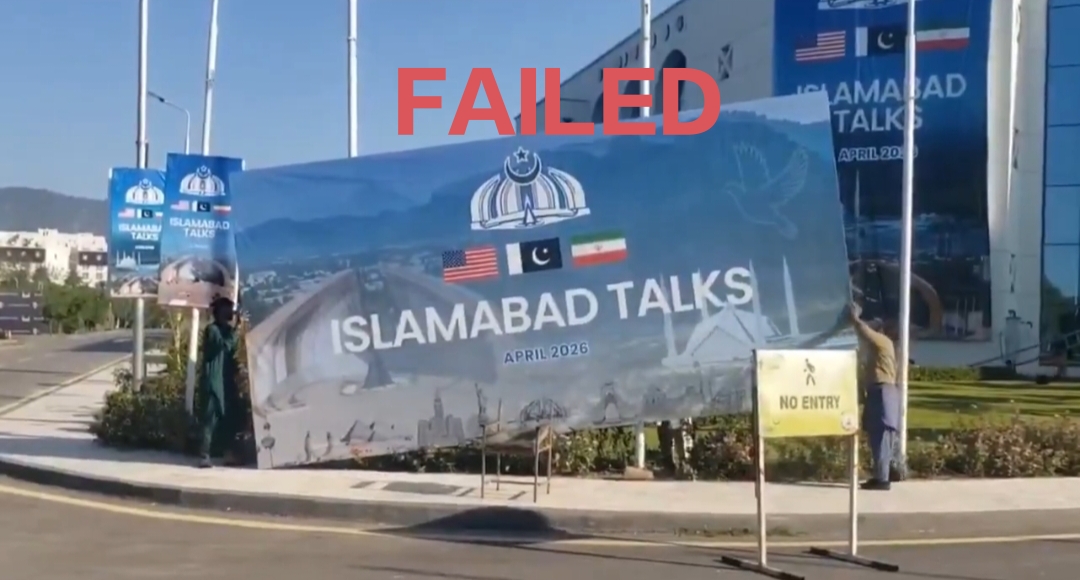
The announcement came hours after 21 hours of marathon face-to-face talks in Pakistan’s capital—mediated and hosted by Islamabad—ended without a deal.
US Vice President JD Vance, leading the American delegation, blamed Iran for rejecting key US demands on its nuclear program and unrestricted access to the strait. Iranian officials countered that Washington made “excessive demands” and failed to build trust.
For Pakistan, which positioned itself as a crucial diplomatic bridge between the two adversaries, the dual blow of failed talks and the US blockade presents a profound dilemma—one that threatens its economy, regional standing, and delicate foreign policy balancing act.
The High-Stakes Role of Host
Pakistan invested significant diplomatic capital in brokering the Islamabad talks. Prime Minister Shehbaz Sharif and Army Chief General Asim Munir played visible roles in facilitating the negotiations, even as tensions simmered from an ongoing US-Iran conflict that had already seen Iran seize control of the strait earlier this year. Islamabad had previously secured limited passage for Pakistani-flagged vessels and urged extensions on deadlines to keep dialogue alive.
Foreign Minister Ishaq Dar responded swiftly to the talks’ failure and Trump’s blockade order, urging both sides to “uphold their commitment to ceasefire” and pledging that Pakistan would “continue to facilitate engagement and dialogue in the days to come.”
Pakistani officials have expressed quiet disappointment, with public sentiment reflecting frustration that the historic summit—billed as a potential breakthrough—yielded no truce.
Yet hosting the talks carried risks. Failure could dent Pakistan’s image as a reliable mediator, especially amid its close ties to China (a key Iranian partner) and longstanding relations with both Washington and Tehran.
Economic Vulnerability in the Crosshairs
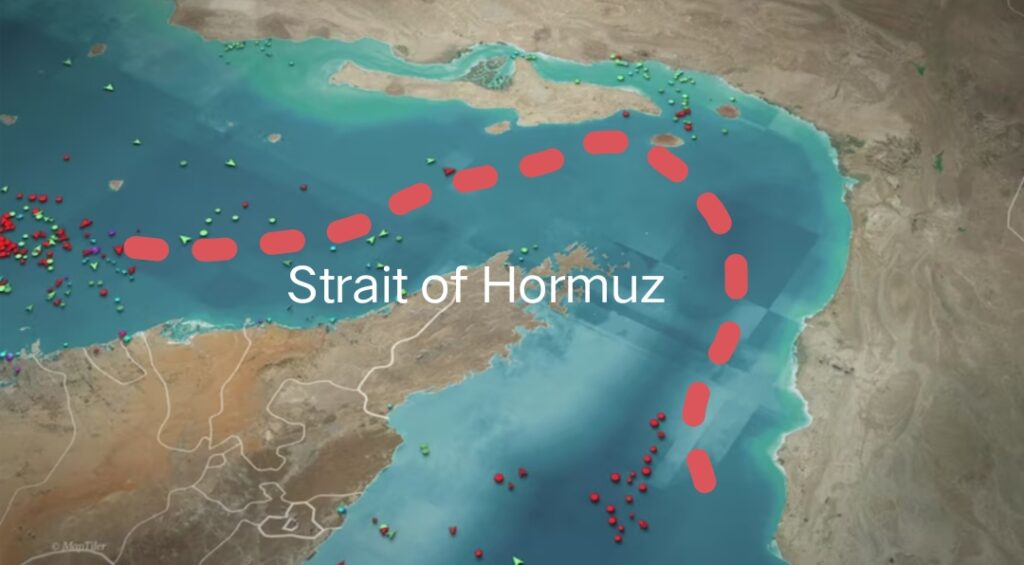
The Strait of Hormuz—through which roughly one-fifth of global oil passes—has already been a flashpoint. Iran’s earlier restrictions triggered an energy supply shock, driving up global prices and hitting import-dependent nations hard.
Pakistan, which relies heavily on oil imports for its energy needs, has repeatedly warned of the fallout: higher fuel costs, inflation, disrupted fertilizers, and threats to food security.
A full US Navy blockade, enforced impartially against all vessels linked to Iranian ports, risks compounding these pressures. Oil prices have already spiked in response to Trump’s announcement, with analysts warning of prolonged volatility. For Pakistan’s fragile economy—already grappling with debt, energy shortages, and post-flood recovery—this could mean steeper import bills, industrial slowdowns, and renewed balance-of-payments strain.
Pakistan’s UN envoy had earlier highlighted these exact risks, calling the strait crisis “one of the largest energy supply shocks in modern history” with direct consequences for ordinary Pakistanis. Now, with the US moving from threats to action, Islamabad finds itself caught between its mediation ambitions and the very economic pain it sought to avert.
A Diplomatic and Strategic Bind
Pakistan’s position is inherently precarious:
- Relations with the US: Washington remains a vital partner for security assistance and counter-terrorism cooperation, yet the blockade directly challenges Pakistan’s push for regional de-escalation.
- Ties with Iran: Shared borders, historical links, and mutual wariness of broader regional conflicts make outright alignment with the US risky. Tehran has already warned that approaching military vessels could breach the fragile ceasefire.
- China Factor: Beijing’s investments via CPEC and its strategic partnership with both Pakistan and Iran add another layer—any prolonged closure of the strait could disrupt broader Belt and Road trade routes.
- Domestic and Regional Stability: Escalation could spill over, affecting Pakistan’s western border security and internal politics.
Analysts describe Pakistan’s approach as a “delicate balancing act”: leveraging its mediator role for diplomatic prestige while shielding its economy from the fallout of great-power confrontation.
What Lies Ahead for Islamabad?
As US Central Command prepares to enforce the blockade starting today Monday, April 13, Pakistan faces urgent choices. Will it double down on backchannel diplomacy to revive talks? Push for exemptions or phased reopenings through quiet engagement with Washington and Tehran? Or focus inward on mitigating domestic energy shocks?
The failed Islamabad talks were never expected to resolve decades of mistrust in a single sitting, but they may change the Pakistan’s image on the global stage. Trump’s swift pivot to blockade, however, has transformed a diplomatic setback into an immediate economic and strategic test.
For a nation that prides itself on shuttle diplomacy amid great-power rivalries, the coming days will determine whether Pakistan emerges as a pivotal peacemaker—or another casualty of a reopened chokepoint that the world cannot afford to lose.
The dilemma is clear: broker peace without paying the price of war.

