
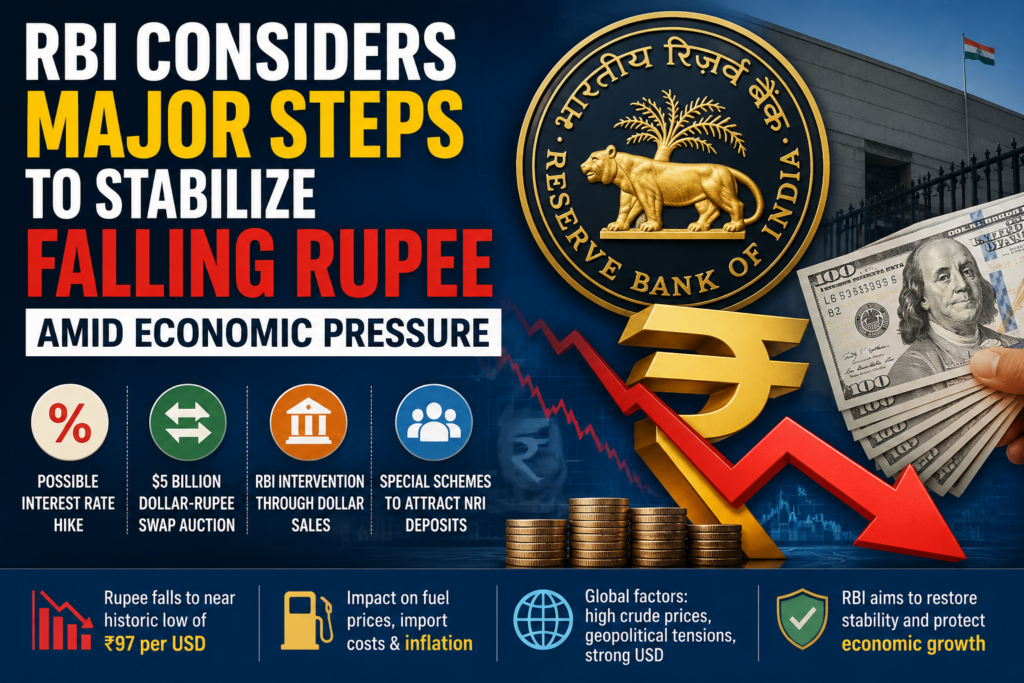
The Reserve Bank of India (RBI) is reportedly exploring several emergency measures to stabilize the Indian rupee after the currency witnessed a sharp decline against the US dollar in recent weeks. According to multiple financial reports, the RBI is considering options such as an interest rate hike, increased dollar sales, special currency swap schemes, and attracting overseas dollar inflows to prevent further weakening of the rupee.
The Indian rupee recently touched historic lows near the 97-per-dollar mark, creating concerns across financial markets and among investors. Analysts say the fall has been driven by rising crude oil prices, foreign investor outflows, global geopolitical tensions, and increasing demand for the US dollar worldwide. India, being a major oil-importing country, faces additional pressure whenever international oil prices surge.
Reports suggest that RBI Governor Sanjay Malhotra and senior central bank officials have held several internal meetings to discuss immediate corrective measures. One of the strongest options being considered is a possible increase in repo rates during the upcoming monetary policy meeting in June. Experts believe that raising interest rates could help attract foreign investments and reduce pressure on the rupee.
Apart from rate hikes, the RBI has already announced a $5 billion dollar-rupee swap auction scheduled for May 26. The move aims to improve liquidity in the banking system while supporting the rupee in foreign exchange markets. The central bank has also reportedly intervened directly by selling dollars through state-run banks to slow the currency’s decline.
Another major proposal under discussion includes attracting dollar deposits from Non-Resident Indians (NRIs) through special deposit schemes, similar to measures taken during the 2013 currency crisis. Financial experts estimate such schemes could potentially bring billions of dollars into India’s foreign exchange reserves.
The weakening rupee has already started affecting fuel prices, import costs, and inflation levels in India. Economists warn that if the currency continues to fall, the prices of imported goods such as petroleum products, electronics, and industrial materials may rise further, increasing the burden on common citizens
Despite the challenges, policymakers remain optimistic about India’s economic fundamentals. Officials reportedly believe the banking system remains stable and the economy continues to show resilience despite global uncertainties. However, experts say swift action from the RBI will be necessary to restore market confidence and prevent excessive volatility in the currency market.
Financial markets are now closely watching the RBI’s upcoming policy decisions and future intervention strategies, as investors expect stronger measures in the coming weeks to defend the rupee and stabilize the broader economy.

