
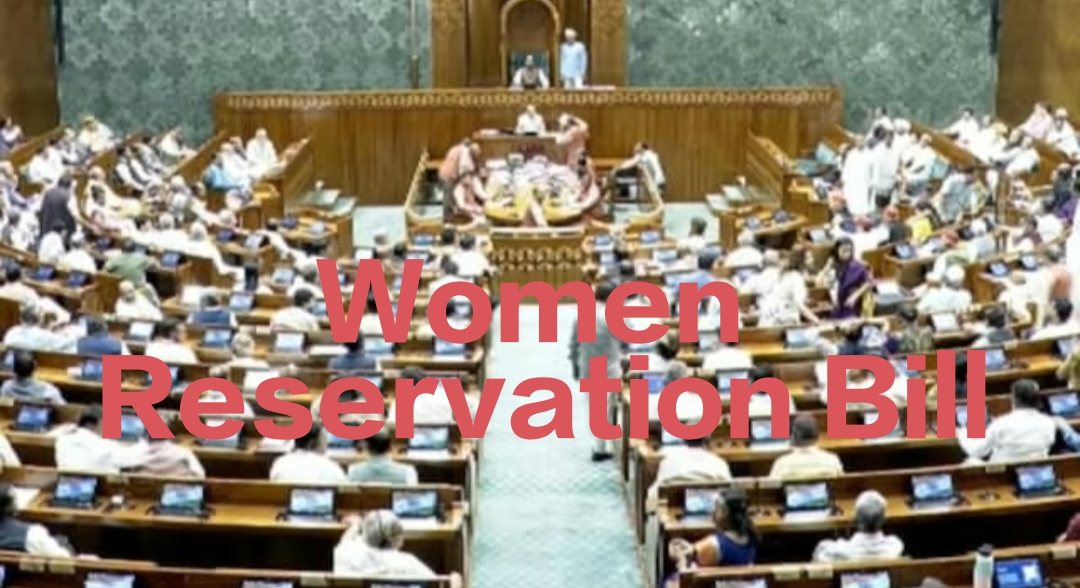
In a dramatic turn of events on April 17, 2026, the Lok Sabha witnessed the defeat of the Constitution (131st Amendment) Bill, 2026 — a landmark legislative push aimed at fast-tracking one-third reservation for women in Parliament and state assemblies. The bill, introduced just a day earlier during a special three-day Parliament session, failed to secure the mandatory two-thirds majority required for a constitutional amendment. With 298 MPs voting in favour and 230 against (out of 528 members present), it fell short by over 50 votes of the 352 needed.
This marked the first major legislative setback for the NDA government in over a decade on a constitutional amendment and has ignited fierce debate. Supporters hailed it as a bold step toward Nari Shakti (women’s power), while critics called it a veiled attempt at electoral redrawing. So, why was this “historic” bill defeated? What was the ideology driving the opposition? And why did parties across the INDIA bloc refuse to back it despite claiming to support women’s reservation?
Background: From 2023’s Triumph to 2026’s Stalemate
The foundation was laid in September 2023 with the Nari Shakti Vandan Adhiniyam (106th Constitutional Amendment), which reserved 33% of seats in the Lok Sabha and state assemblies for women. Passed almost unanimously (454-2 in Lok Sabha), it was celebrated as a historic breakthrough after 27 years of delays. However, its implementation was explicitly tied to a future delimitation exercise — to be conducted after the first census post-2026 (likely 2031) — and would take effect only from the 2029 general elections or later.
The 2026 bill sought to accelerate this by enabling delimitation based on the 2011 Census data (bypassing the wait for fresh population figures), expanding the Lok Sabha’s strength (potentially to around 850 seats), and operationalizing the women’s quota immediately in the newly redrawn constituencies. It was part of a three-bill package, including the Delimitation Bill, 2026, and amendments for Union Territories.
The government argued this would deliver women’s empowerment sooner, aligning representation with demographic realities and population growth. Prime Minister Narendra Modi and Home Minister Amit Shah framed opposition resistance as anti-women politics, warning that blocking the bill would invite the “wrath of women voters.”
Why the Opposition Voted It Down: Not Anti-Women, But Anti-Delimitation Package
Opposition leaders, led by the Congress, TMC, DMK, SP, RJD, and other INDIA alliance partners, were unanimous in their stance: they fully support 33% women’s reservation but rejected the bill because it was inextricably linked to delimitation without a fresh census. Rahul Gandhi described it as an “unconstitutional trick” to “change the electoral map of India” under the guise of women’s empowerment. Congress president Mallikarjun Kharge accused the government of using “half the country’s population as a shield” to undermine federalism.
Key objections included:
- Delimitation Without Fresh Data: Using 2011 Census figures (now 15 years old) would disproportionately boost seats in northern and Hindi-belt states with higher population growth, while penalizing southern states (Tamil Nadu, Kerala, Karnataka, Andhra Pradesh) that successfully controlled population through family planning and development. Critics called this “gerrymandering” that could tilt future elections toward the BJP, which dominates in the north.
- Threat to Federal Structure: Southern leaders, including from the DMK and TMC, argued it would erode the principle of equitable representation, rewarding states that failed on demographic management and weakening India’s federal balance. They demanded implementation of the 2023 quota in the existing 543 Lok Sabha seats without any expansion or redrawing.
- Rushed Process and Lack of Trust: The special session was convened abruptly amid ongoing state elections in Tamil Nadu and West Bengal, with minimal all-party consultation. Opposition parties cited a “trust deficit” with the government and Election Commission, fearing the exercise would favor the ruling dispensation. Rahul Gandhi and others emphasized: “This was never about women’s reservation. It was only about the BJP’s ‘nara shakti’ [slogan power].”
- No Sub-quotas or Broader Reforms: Echoing past debates, some voices (though less prominent now) reiterated demands for OBC, SC/ST, and minority women sub-quotas within the 33%, but the core fight was regional and federal rather than caste-based.
The opposition celebrated the defeat not as a blow to women but as a victory for “the Constitution” and against backdoor delimitation. Akhilesh Yadav (SP) called it a defeat of “BJP’s malice,” while Priyanka Gandhi Vadra said Modi’s “hollow attempt to pose as messiah of women has failed.”
The Ideology Behind the Divide
At its heart, this is a clash of two competing visions:
- NDA’s Ideology: Population-based justice and rapid empowerment. The government views delimitation as long-overdue democratic correction — giving voice to India’s growing northern population while delivering on women’s representation. It positions the bill as transcending party lines, accusing opponents of prioritizing regionalism and anti-BJP politics over Nari Shakti. Amit Shah staged protests post-vote, vowing to take the issue directly to women voters.
- Opposition’s Ideology (INDIA Bloc): Federalism, equity, and checks on majoritarianism. Rooted in Dravidian and regionalist ethos (especially in the south), it defends states’ relative political weight based on development achievements rather than raw numbers. Leaders argue true empowerment cannot come at the cost of distorting India’s federal compact or enabling partisan seat manipulation. They insist on a fresh census for transparent, data-driven delimitation and immediate quota rollout in current constituencies.
This mirrors deeper fault lines: north vs south, centralizing power vs state autonomy, and short-term political optics vs long-term constitutional safeguards. It also revives historical tensions from the 1990s–2010s, when parties like SP and RJD stalled earlier women’s bills demanding “reservation within reservation” for OBCs — though today’s battle has shifted from caste to region.
What Lies Ahead?
The 2023 Women’s Reservation Act remains law, but its rollout is still years away pending the next census and delimitation. The 2026 bill’s defeat means no immediate fast-tracking. The NDA has promised to highlight the opposition’s stand in upcoming elections, framing it as betrayal of women. The INDIA bloc, united in victory, sees it as proof that cross-party resistance can protect democratic federalism.
Whether this defeat delays women’s political empowerment or safeguards India’s diverse federal fabric remains the central question. One thing is clear: in India’s democracy, even “historic” bills for women are never just about gender — they are battlegrounds for power, population, and politics. The real test will be whether future consensus can separate genuine Nari Shakti from electoral strategy.


